How to Invite the Right Guest
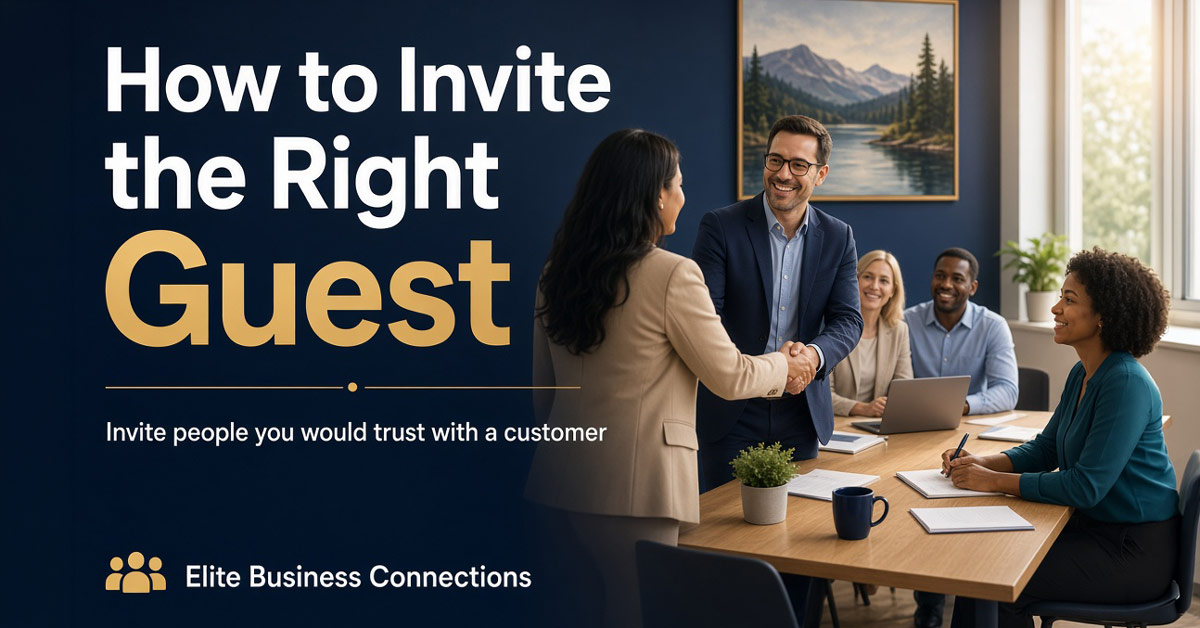
The fastest way to weaken a referral group is to fill chairs with whoever said yes. The fastest way to strengthen one is to invite people you would trust with a customer.
If you are a member of Elite Business Connections, inviting guests is part of how we grow toward 30. It is not a contest to see who brings the most visitors. It is a judgment call that protects the trust already in the room.
Invite people whose work the table does not already cover
Start with the open categories that create regular household and business introductions: plumbing, electrical, residential remodeling, house cleaning, flooring, roofing, painting, CPA and tax, Realtor, auto repair, and the other trades we have named in meetings.
You can check the current protected categories in the member directory. If you are unsure whether a category is open, ask leadership before you invite. It is better to pause than to walk a guest into a conflict.
Filled seats stay protected. Applications are only considered when a seat under the cap of 30 is available and the category is open. That process is outlined in How Membership Works.
Invite people you would actually recommend
The filter is simple. Would you give this person the name of a customer you care about? If the answer is “not yet” or “only if nobody else is available,” do not use Tuesday morning to work that out in public.
Look for reputation, reliability, and a willingness to show up. Charm is optional. Follow-through is not.
This is the same standard we use when we decide whether to refer someone outside the group. The room is not the place to audition an unproven vendor.
How to explain the group without overselling it
You do not need a script. You need three sentences.
We meet Tuesday mornings in Coeur d’Alene. Each profession has one seat. The point is to know one another’s work well enough to make a confident introduction.
Then invite them to visit once. Do not promise accepted membership. Do not promise referrals. Promise a clear look at the room.
If they ask what happens after a visit, point them to the process: application (only if the category is open), category review, presentation to membership, a vote by active members, then onboarding if approved. Visiting is free and carries no obligation. Details are on the Join Us page and in How Membership Works.
What your job is on the morning they visit
Meet them at the door. Help them with names. Do not speak for their business. Let them introduce themselves the same way every other guest does.
After the meeting, tell them what the next step is if they are interested: application, category review, membership conversation, vote, then onboarding. The full steps live in How Membership Works.
If they are not a fit, say that kindly and early. Protecting the guest’s time is part of protecting the group. A clear “this category is already filled” or “this does not look like a match” saves everyone awkward follow-up.
What not to do
- Do not invite a second person in a filled category “just to network.”
- Do not surprise leadership with a guest whose work collides with a sitting member.
- Do not lobby the membership in the hallway as if this were a popularity vote.
- Do not disappear after you bring them. An invitation includes the follow-up.
Category protection exists so members can refer without competing against someone at the same table. That structure is explained in Why We Protect One Seat Per Category.
The group we want
The group we want is one members do not want to miss. That starts with who we ask to sit down.
Invite the people you would trust with a customer. Check the open categories first. Meet them at the door. Follow up. That is how we grow toward 30 without diluting the trust that makes the referrals worth making.
If you are unsure about a prospect, ask before you invite. The Tuesday morning room is small on purpose.

Ed Bejarana
Ed Bejarana is the founder of Main Street WebWorks, where he helps small businesses improve their digital visibility so people, search engines, and AI assistants can find, understand, and confidently recommend them. With more than three decades of experience in technology and digital marketing, Ed has designed over 2,500 websites and developed practical frameworks—including EASE™, E-E-A-T, and ATLAS™—that help businesses build authority, strengthen AI signals, and create meaningful connections with customers. As a veteran, author, and educator, he enjoys translating complex technology into practical strategies that help local businesses thrive in an AI-driven world.